Why POS Training Usually Fails
When a new POS rollout fails, the owner blames the software. Almost always, the real problem is training — or the lack of it.
Here's the typical failed rollout:
1. Owner installs the POS the morning of a busy shift
2. Staff get a 5-minute walkthrough while customers are already arriving
3. First real-world order causes confusion at the terminal
4. Staff revert to the old system "just for today"
5. "Just for today" becomes forever
Here's how to do it right — in under 2 hours, before you go live.
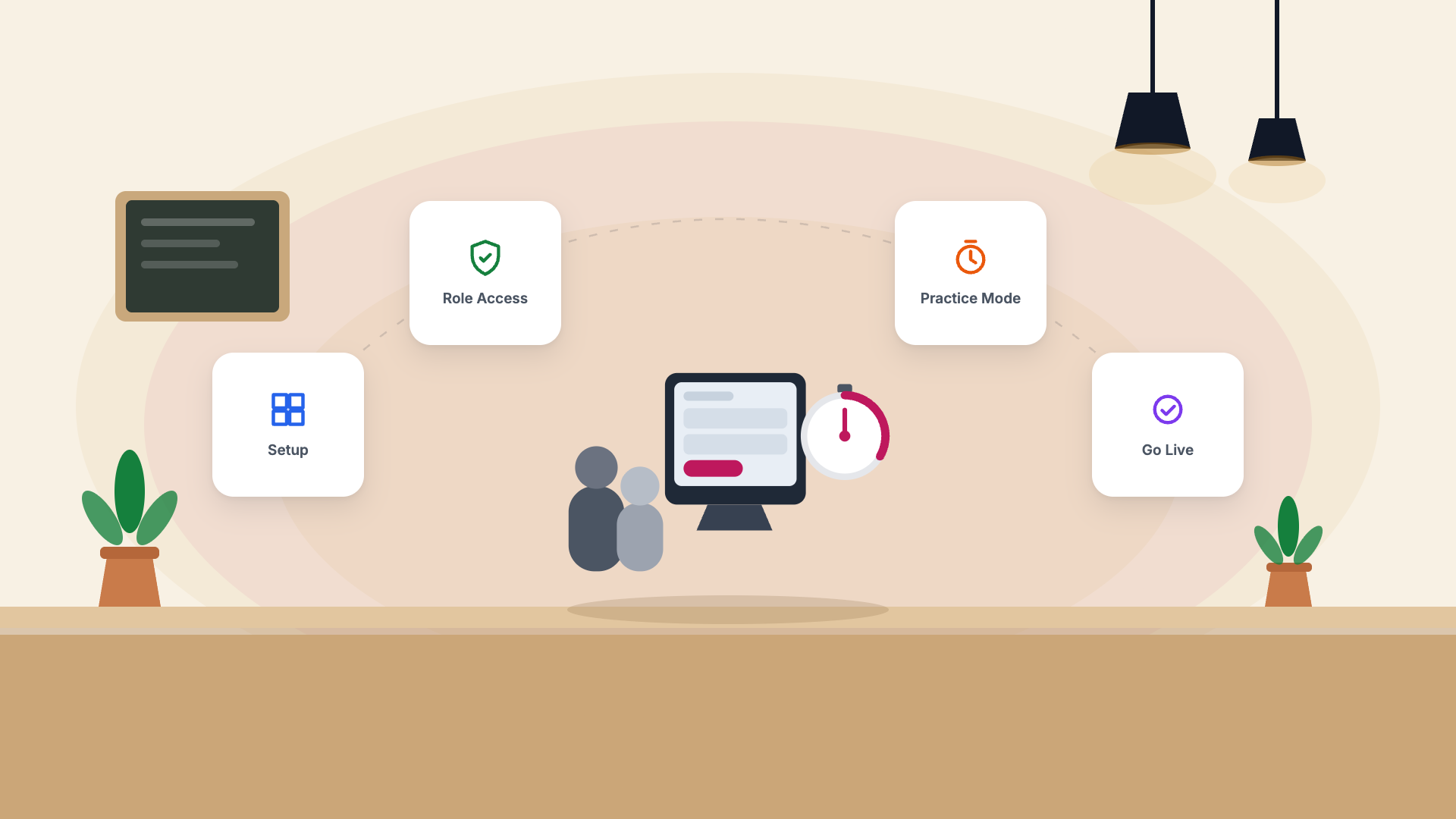
The 2-Hour Training Playbook
Hour 1: Core Workflow Only (45 min)
Don't show everything the POS can do. Show only what staff will use in the next 48 hours:
Cashier / Front of House (30 min):
- Opening a new table / order
- Adding items and modifiers
- Applying a discount
- Splitting a bill
- Closing a bill (cash / card / UPI)
Kitchen Staff (15 min):
- Reading the KDS screen
- Marking an item as ready
- Handling a modification alert
Hour 1 (Last 15 min): Practice Run
Create 3–4 fake orders. Have each staff member complete them on the POS while you watch. Correct mistakes in real time.
Hour 2: Edge Cases + Q&A (60 min)
Cover the situations that cause the most anxiety:
- What if a customer wants to change their order after it's sent to the kitchen?
- What if a bill is split unevenly?
- What if the internet goes down?
- What if an item is out of stock?
Then open the floor for questions. Staff who ask questions are engaged. Staff who go silent are worried — pull them aside and walk through the core flow again one-on-one.
The Cheat Sheet
Print a one-page cheat sheet listing the 5 most common actions with step-by-step button presses. Laminate it and stick it next to every POS terminal. This single step reduces support calls by 60%.
Go-Live Day
- Have a manager or tech-savvy staff member stationed at each POS for the first 2 hours
- Run the old system in parallel for the first service if possible (don't enter orders twice, just have it available as a fallback)
- Review the day's transactions that evening — catch errors before they become habits
Most staff are fully independent within 3–4 shifts. The discomfort of "new" disappears faster than you expect.