The Hidden Cost of Food Waste
For most Indian restaurant owners, food waste is the silent profit killer. A restaurant doing ₹5 lakh in monthly revenue might be throwing away ₹40,000–₹60,000 worth of ingredients every month — without even realising it.
The problem isn't carelessness. It's the lack of a system.
Why Restaurants Waste So Much Food
1. Over-ordering due to no par-level system
Without knowing exactly how much of each ingredient you use per day, most kitchens order based on gut feel. The result: you over-order perishables and throw away what doesn't sell.
2. No FIFO discipline
FIFO (First In, First Out) means using older stock before newer stock. Without a labelling and rotation system, new deliveries get used first while older stock expires at the back of the shelf.
3. Portion inconsistency
When every chef portions differently, you can't predict ingredient consumption accurately. A 20% variation in portion size means a 20% error in your procurement calculations.
4. No real-time inventory visibility
If you don't know your current stock levels, you can't make smart purchase decisions. You either over-order "just in case" or run out mid-service.
The 5-Step System to Cut Waste by 40%
Step 1: Track every ingredient with real-time inventory
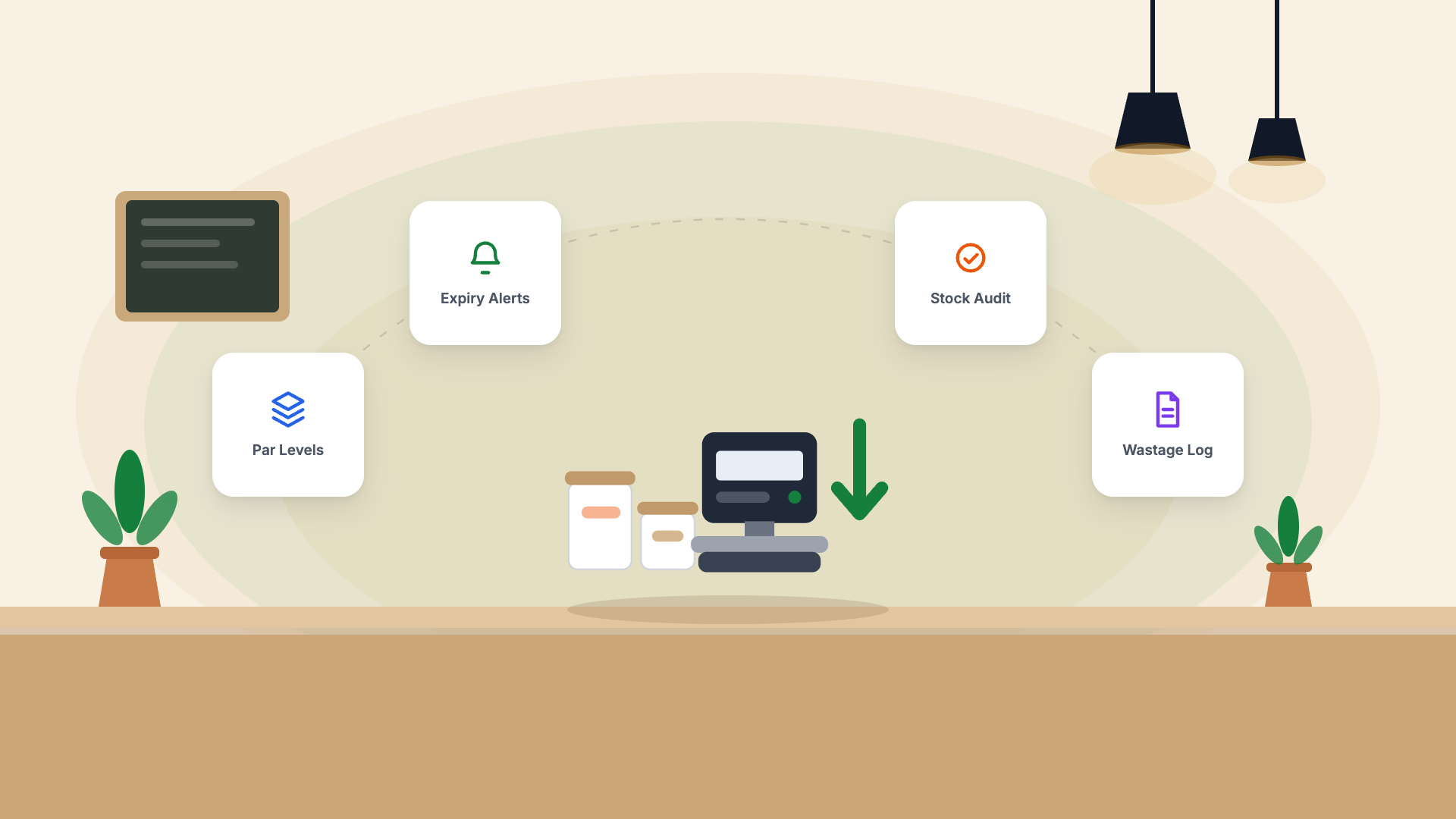
Set up each ingredient in your POS/inventory system with a current quantity. Every time a dish is prepared, the ingredient quantities are automatically deducted. You always know what's left.
In Pangat: Every item on your menu has a recipe card linking it to raw ingredients. When an order is placed, stock is deducted automatically.
Step 2: Set par levels and reorder points
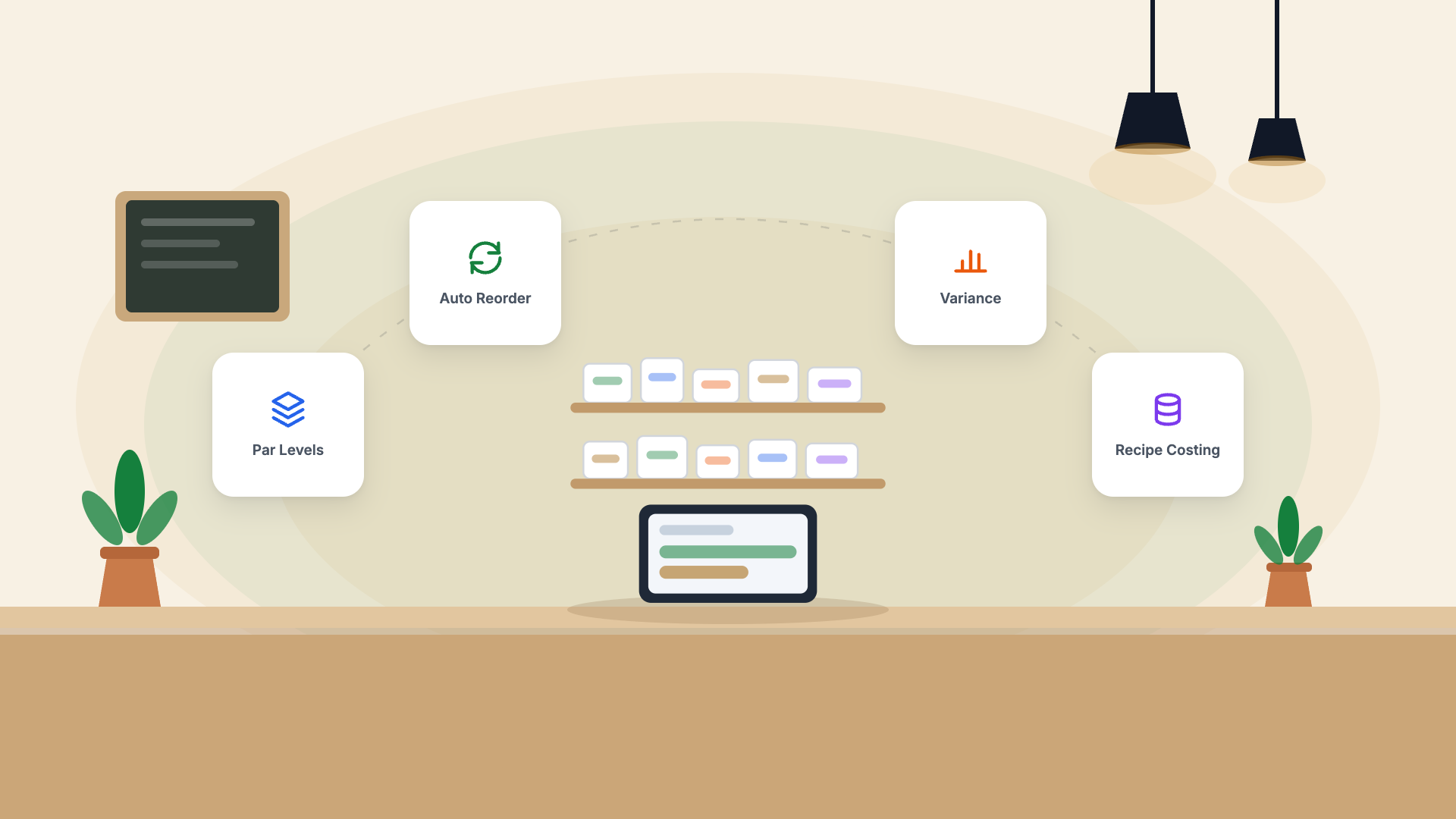
A par level is the minimum quantity of an ingredient you must always have in stock. A reorder point is the quantity at which you trigger a purchase order.
Example:
- Chicken breast: Par level = 5 kg, Reorder point = 2 kg
- When stock hits 2 kg, the system alerts you to order more
Step 3: Implement strict FIFO labelling
Label every container with the date it arrived. Train every kitchen staff member that the oldest-labelled item is always used first. This alone can reduce spoilage by 15–20%.
Step 4: Analyse your waste daily
Keep a physical waste log or use your POS system to track items that were prepared but not sold. After two weeks, you'll see patterns — which dishes are consistently over-prepped, which ingredients expire most often.
Step 5: Adjust procurement frequency
Instead of one large weekly order, consider 2–3 smaller orders per week for high-perishability items. Yes, it means more vendor interactions, but the reduction in spoilage more than pays for the extra effort.
Real Numbers from Indian Restaurants
A mid-size casual dining restaurant in Pune with 60 covers implemented these steps using Pangat:
| Metric | Before | After (3 months) |
|---|---|---|
| Monthly food cost % | 38% | 29% |
| Monthly waste value | ₹52,000 | ₹18,000 |
| Stock-outs per week | 4–5 | 0–1 |
The ₹34,000/month saving went directly to the bottom line.
Quick Wins to Start This Week
- Day 1: Walk your kitchen and throw out everything past its date. Do a full stock count.
- Day 2: Set up recipe cards for your top 20 dishes in your POS.
- Day 3: Brief your kitchen team on FIFO labelling. Start labelling today.
- Day 7: Review what was wasted this week. Set par levels for the top 5 wasted ingredients.
Food waste reduction isn't a one-time project — it's a habit. Build the system, train the team, and review the numbers weekly. The 40% reduction isn't a promise; it's what we see from restaurants that commit to the process.