The Cloud Kitchen Reality in 2026
India now has over 35,000 cloud kitchens operating across Tier 1 and Tier 2 cities. The business model is appealing: no rent for a dining room, no front-of-house staff, lower setup costs. But the economics are brutal.
A typical cloud kitchen faces:
- 25–30% aggregator commission on every order
- Food cost of 30–35%
- Packaging cost of 4–6%
- Rent and utilities: 10–12%
That leaves 17–25% gross margin before labour, marketing, and overheads. To survive — let alone profit — you need to be operationally excellent.
The 3 Operations Every Cloud Kitchen Must Nail
1. Order aggregation and routing
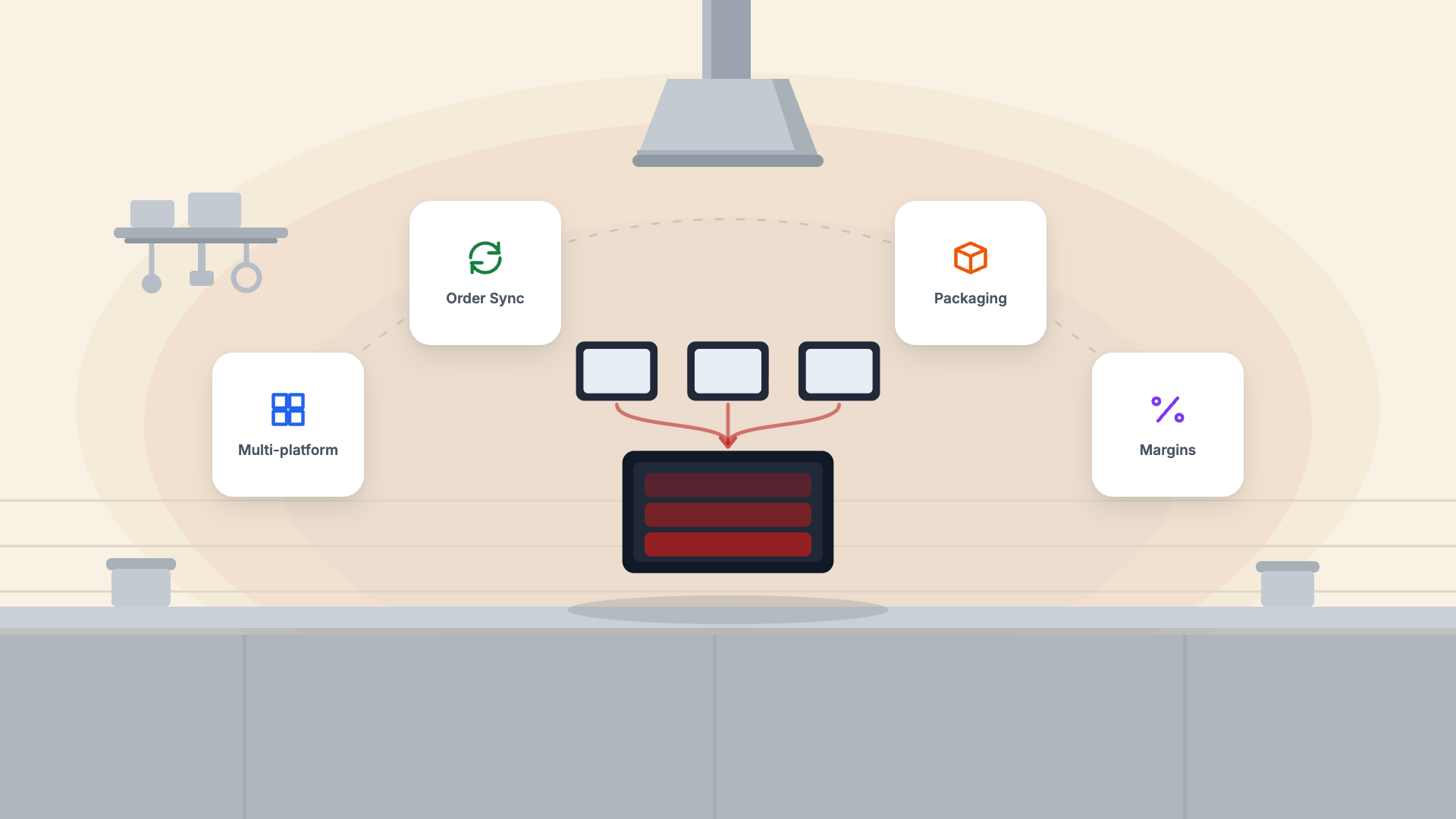
Running on Zomato, Swiggy, and your own website simultaneously means orders come from three different channels with different interfaces. Without a unified order management system, orders get missed, preparation starts late, and delivery ratings drop.
Solution: A single kitchen screen (KDS) that shows all orders — regardless of source — ranked by promised delivery time. The kitchen doesn't care where the order came from; they just see what needs to go out and when.
2. Inventory precision
Unlike dine-in restaurants where you can 86 an item on the fly, a cloud kitchen that runs out of an ingredient mid-service can't apologise in person. The customer just gets a cancellation notification and a refund — and leaves a 1-star review.
Run daily opening stock counts. Set minimum stock alerts. Never let a menu item be available on apps when you don't have the ingredients to make it.
3. Delivery time management
Your aggregator rating is almost entirely determined by order acceptance rate and delivery time. Both are in your control:
- Order acceptance rate: Don't go online if your kitchen can't handle the volume
- Preparation time: Set realistic prep times on aggregator dashboards — underestimating kills your rating faster than anything else
Multi-Brand Kitchen: The Profitability Unlock
The most profitable cloud kitchens in India run 3–5 brands out of one kitchen. One kitchen infrastructure, shared inventory, different menus and branding for different customer segments.
A single operator might run:
- A North Indian brand for family meals
- A healthy bowls brand for the 25–35 fitness crowd
- A biryani-only brand for the high-volume biryani demand in their city
- A late-night snacks brand running only from 10 PM to 2 AM
The incremental cost to run brand 2, 3, and 4 is minimal. The revenue is additive.
Pangat for Cloud Kitchens
Pangat consolidates all your aggregator orders into one KDS, manages inventory across all brands from one dashboard, and generates GST-compliant invoices automatically for every order. Your CA gets real-time access without you sending a single file.