What Is FSSAI and Why Does It Matter?
The Food Safety and Standards Authority of India (FSSAI) is the regulatory body that licenses all food businesses in India under the Food Safety and Standards Act, 2006.
Operating a restaurant without a valid FSSAI license is a punishable offence. Penalties range from ₹1 lakh to ₹5 lakh for first-time violations, and repeat violations can result in business closure. More practically, Zomato and Swiggy require a valid FSSAI license to list your restaurant on their platforms.
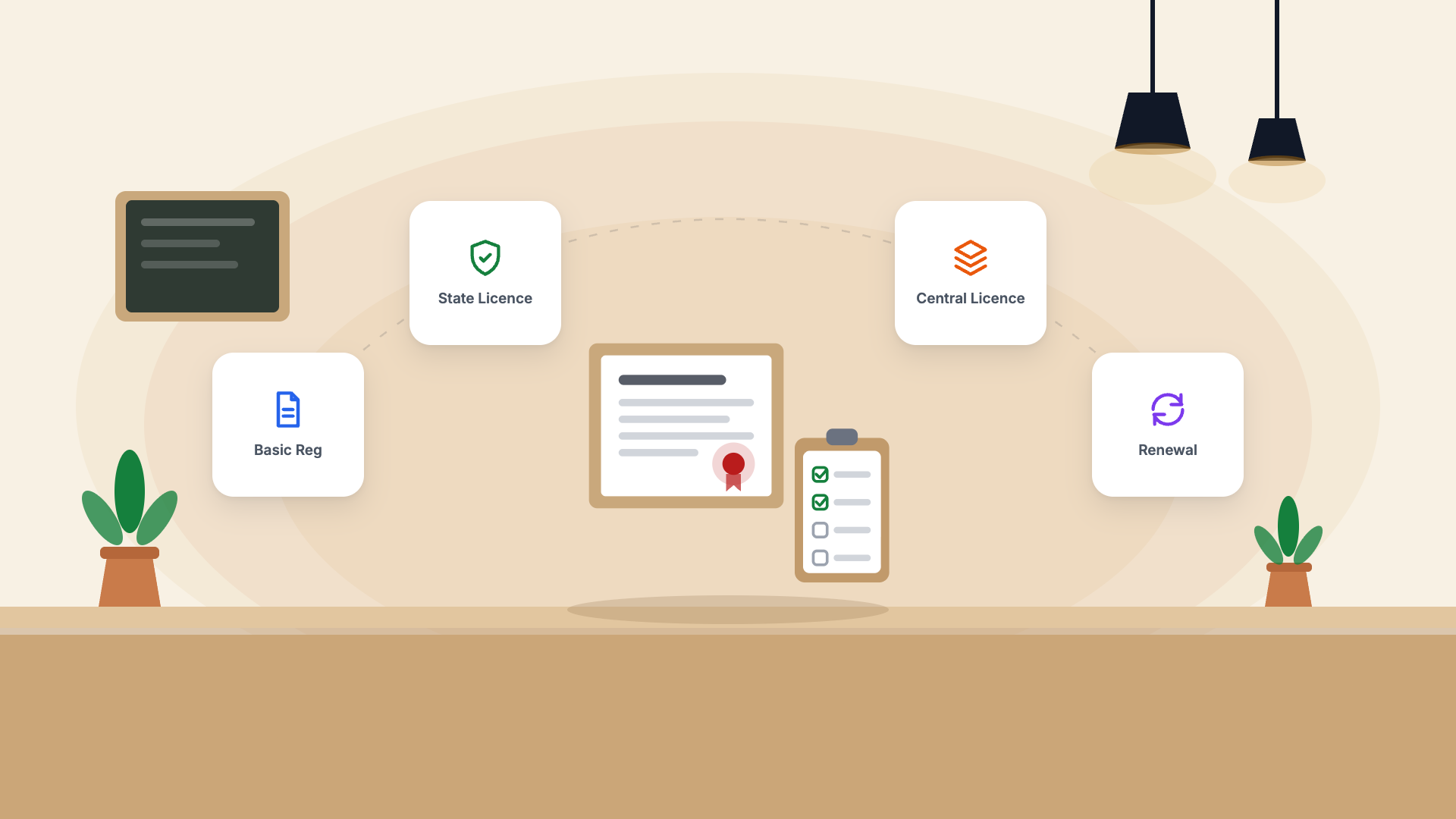
The Three Tiers of FSSAI License
1. Basic Registration
- Who: Annual turnover below ₹12 lakh
- Fee: ₹100/year
- How: Apply on the FoSCoS portal (foscos.fssai.gov.in)
- Processing: 7 working days
2. State License
- Who: Annual turnover between ₹12 lakh and ₹20 crore
- Fee: ₹2,000–₹5,000/year depending on state
- How: Apply on FoSCoS, documents submitted to state food authority
- Processing: 30–60 days
3. Central License
- Who: Annual turnover above ₹20 crore, or operating in multiple states, or running a hotel with more than 5 star rating
- Fee: ₹7,500/year
- How: Apply on FoSCoS, FSSAI central office processes
- Processing: 30–60 days
Documents Required
For most restaurant owners applying for a State License:
- Proof of identity (Aadhaar, PAN)
- Proof of business address (rental agreement or ownership document)
- Food safety management plan (a written statement of your hygiene practices)
- List of food products handled
- Declaration form
For cloud kitchens and multi-outlet operators, you'll need a separate license for each location.
Renewal: Don't Miss the Deadline
FSSAI licenses are valid for 1–5 years (you choose at application). Renewal must be done before the expiry date — there is no grace period.
Set a calendar reminder 60 days before your license expiry. Renewal on FoSCoS takes the same process as fresh registration but is faster because your business data is already on file.
Compliance Beyond the License
Having the license is just the start. FSSAI compliance also requires:
- Displaying the FSSAI license number on your menu, signboard, and delivery packaging
- Maintaining hygiene records — pest control logs, food temperature logs, staff health certificates
- Annual return filing (for state and central license holders by May 31 each year)
- Incident reporting — any food safety complaints must be logged and reported
A surprise FSSAI inspection can happen any time. Maintain your records consistently — not just before a known inspection.