The Commission Problem
Let's run the numbers on a typical delivery order:
- Order value: ₹500
- Aggregator commission (25%): -₹125
- Packaging: -₹25
- Food cost (32%): -₹160
- Delivery partner tip (if applicable): -₹20
- Gross profit: ₹170 (34%)
Now subtract rent, utilities, and labour, and you're often below 10% net. For many restaurants, delivery via aggregators is barely profitable — or actively loss-making on certain items.
Here's how to fix it without abandoning the platforms entirely.
Strategy 1: Direct Ordering Channel
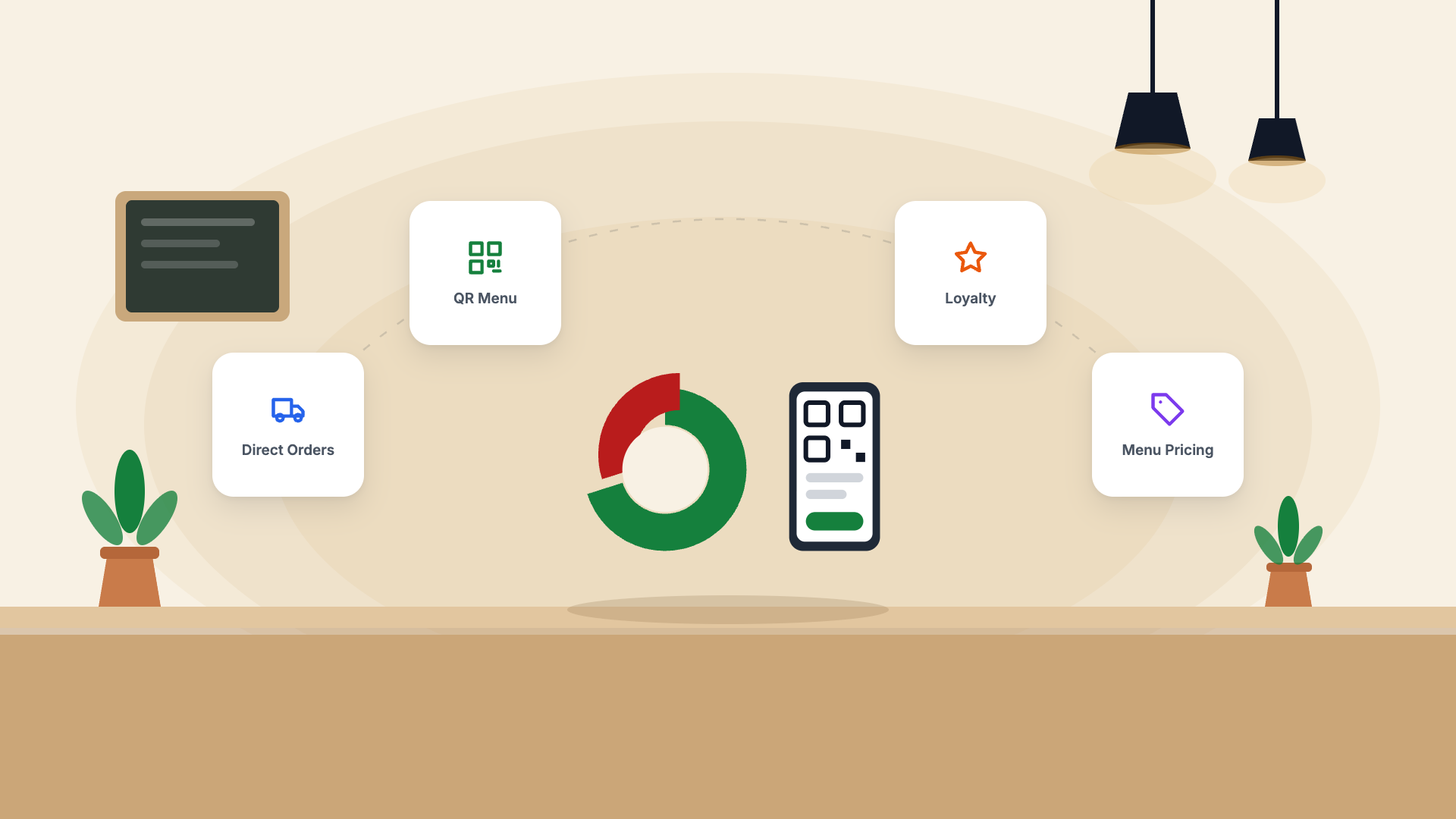
The single most powerful move is building a direct ordering channel. Your own website or WhatsApp ordering link where customers order directly and you pay zero commission.
Yes, it takes effort to drive traffic there. But your most loyal customers — the ones who order from you 2–3 times a month — are exactly the people who will order direct if you make it easy and give them a reason to.
How to do it:
- Add a "Order Direct" link to your Instagram bio and Google Maps listing
- Offer a 10% discount for direct orders (you're still 15–20% better off than aggregator orders)
- Print the direct order link on your packaging inserts
Strategy 2: Aggregator Menu Engineering
Your aggregator menu doesn't have to be identical to your in-restaurant menu. Many smart operators:
- Price items 10–15% higher on aggregators to partially offset the commission
- Remove low-margin items from delivery menus entirely
- Add delivery-optimised items that travel well, have high margins, and require low prep time
Strategy 3: Reduce Packaging Cost
Packaging is often 4–6% of order value and is rarely optimised. Audit your packaging:
- Are you using more packaging than needed per order?
- Can you negotiate bulk pricing with your packaging supplier?
- Can you use standardised container sizes that work across multiple dishes?
Cutting packaging from 5% to 3% of order value improves your margin by 2 percentage points — significant at scale.
Strategy 4: Aggregator Ads ROI Discipline
Zomato and Swiggy ad platforms are effective — but easy to overspend on. Treat them like any other marketing channel:
- Set a maximum cost-per-order target
- Review ad performance weekly
- Turn off ads during peak hours when you're already at capacity (you're paying for orders you'd get anyway)